Humanoid Robots Are Transforming Building Management Worldwide
Modern Facility Management Needs More Than Human Labor
Today’s buildings are evolving beyond traditional infrastructure into smart buildings, where engineering systems, IoT, and AI work together to improve operational efficiency, enhance safety, and create better experiences for occupants.
At the same time, Facility Management (FM) providers face growing challenges, including labor shortages, rising operating costs, and increasing client expectations for high-quality, 24/7 services.
The question is no longer whether to adopt technology, but how to use technology to empower people and help them work more effectively.
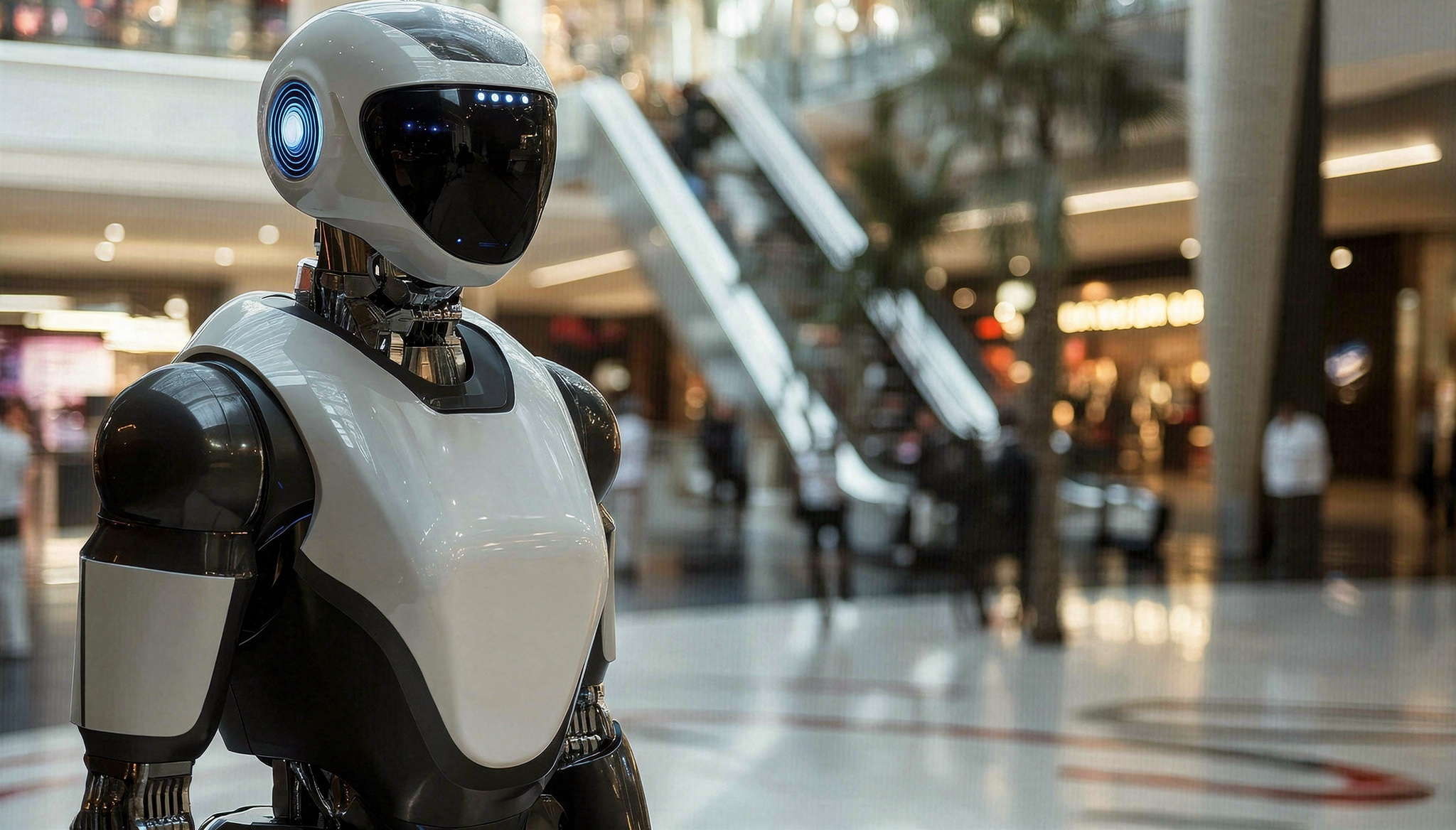
One of the most promising technologies attracting global attention is the humanoid robot.
Why Humanoid Robots Are Well-Suited for Facility Management
Facility Management involves many operational tasks that align well with the strengths of humanoid robots.
Examples include:
- Routine patrols and site inspections
- Asset condition monitoring and data collection
- Transporting materials and equipment within buildings
- Cleaning selected areas
- Repetitive, standardized tasks
- Operations in hazardous or physically demanding environments where continuous human work may not be ideal
These tasks require consistency, precision, and the ability to operate continuously—areas where automation can provide significant value.
Humanoid Robots Are Not Replacing People—They Are Empowering Them
One common misconception is that humanoid robots will replace the workforce entirely.
In reality, the vision of Smart Facility Management is built on collaboration between people and technology.
Humanoid robots are best suited for physically demanding, repetitive, and time-consuming tasks, while human professionals continue to play essential roles in:
- Decision-making
- Situation assessment and analysis
- Communication with building occupants
- Solving complex problems
- Emergency response and operational management
Rather than diminishing the value of people, technology enables FM professionals to focus on higher-value work that requires judgment, expertise, and human interaction.
A Global Trend Already Underway
Around the world, organizations are beginning to explore the use of humanoid robots in Facility Management and service operations.
For example, YY Group has been developing and piloting humanoid robots for Facility Management applications, supporting on-site data collection while evaluating their potential for commercial deployment.
Meanwhile, Japan Airlines has been testing humanoid robots at Haneda Airport to assist with baggage handling, with plans to expand their role into other support services, including aircraft cabin cleaning and selected ground operations.
These initiatives demonstrate that humanoid robots are increasingly being developed as collaborative assistants rather than complete replacements for human workers.
The Next Step in Smart Facility Management
When humanoid robots work alongside technologies such as:
- IoT sensors
- AI analytics
- Digital twins
- Building Management Systems (BMS)
- Real-time building management platforms
facility managers gain faster access to real-time operational insights and can make more informed, data-driven decisions.
The result is:
- Reduced building downtime
- Improved safety
- More efficient resource utilization
- Lower long-term operating costs
- Higher service quality and operational standards

The Future of Facility Management Is People + AI + Robotics
No matter how advanced technology becomes, people will remain at the heart of Facility Management.
Humanoid robots will take on physically demanding, repetitive, and high-risk tasks, while professionals focus on strategic planning, critical decision-making, complex problem-solving, and delivering exceptional occupant experiences.
This is the direction many countries are already moving toward, and it is one of the most significant trends shaping the future of the global Facility Management industry.
At Metthier, we believe the future of building management is driven not by people alone or technology alone, but by the seamless integration of both. By combining human expertise with intelligent technologies, we can create buildings that are safer, more efficient, and better prepared for the demands of a rapidly evolving world.
Because Smart Facility Management is not about choosing between people and robots—it is about enabling both to perform at their very best.