Metthier Partners with Mahidol University to Develop SMART Campus, Thailand’s First Smart IFM Learning Center Advancing a Model for Digital Cities and Sustainable Smart Campuses
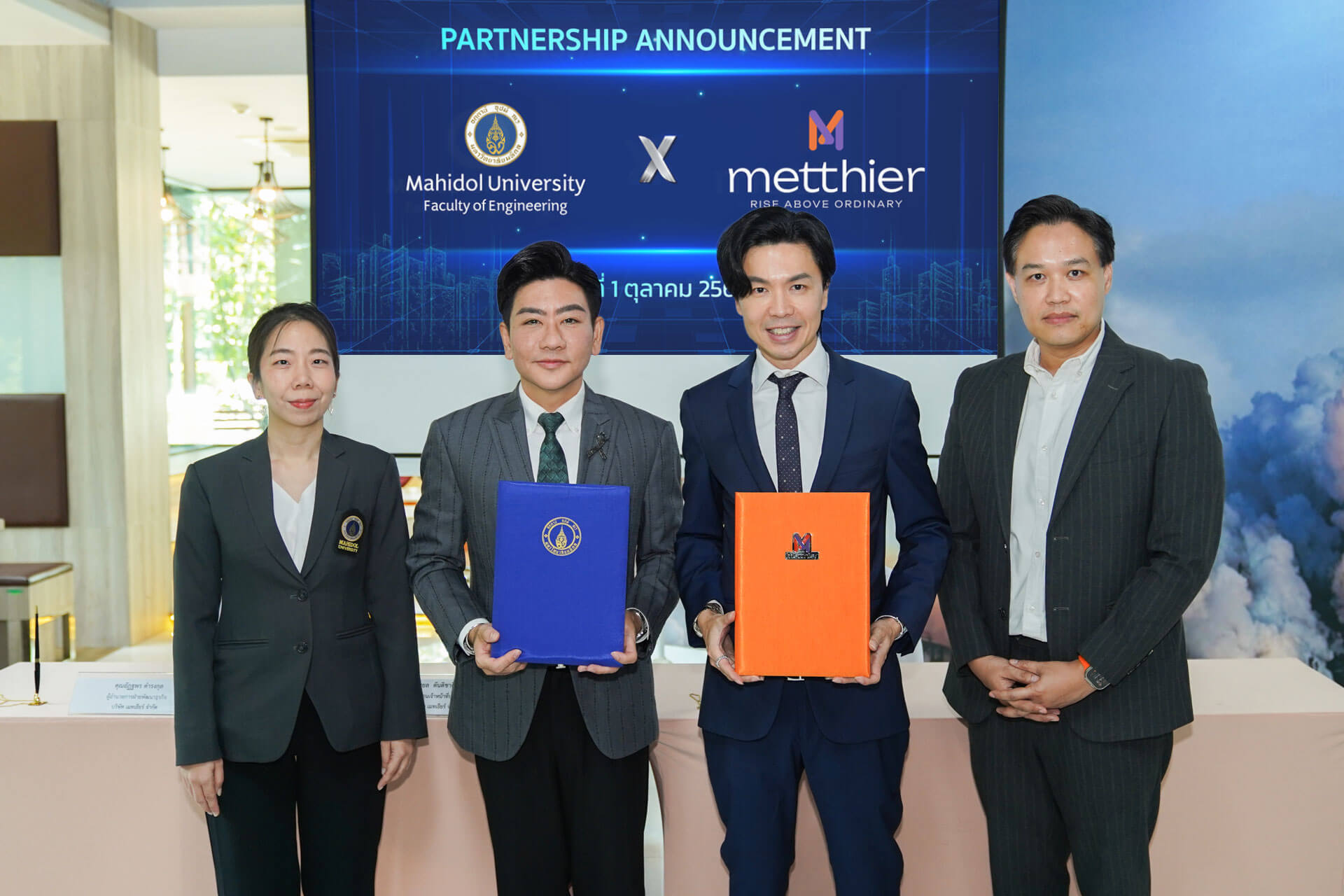
Metthier is advancing smart campus management through a collaboration with the Faculty of Engineering at Mahidol University, Salaya, to develop “SMART Campus,” Thailand’s first model and learning center for Smart Integrated Facility Management (Smart IFM). The initiative aims to establish a model for digital cities and sustainable smart campuses aligned with international standards, while serving as a hub for technological learning and knowledge transfer across academia, government, and the private sector.
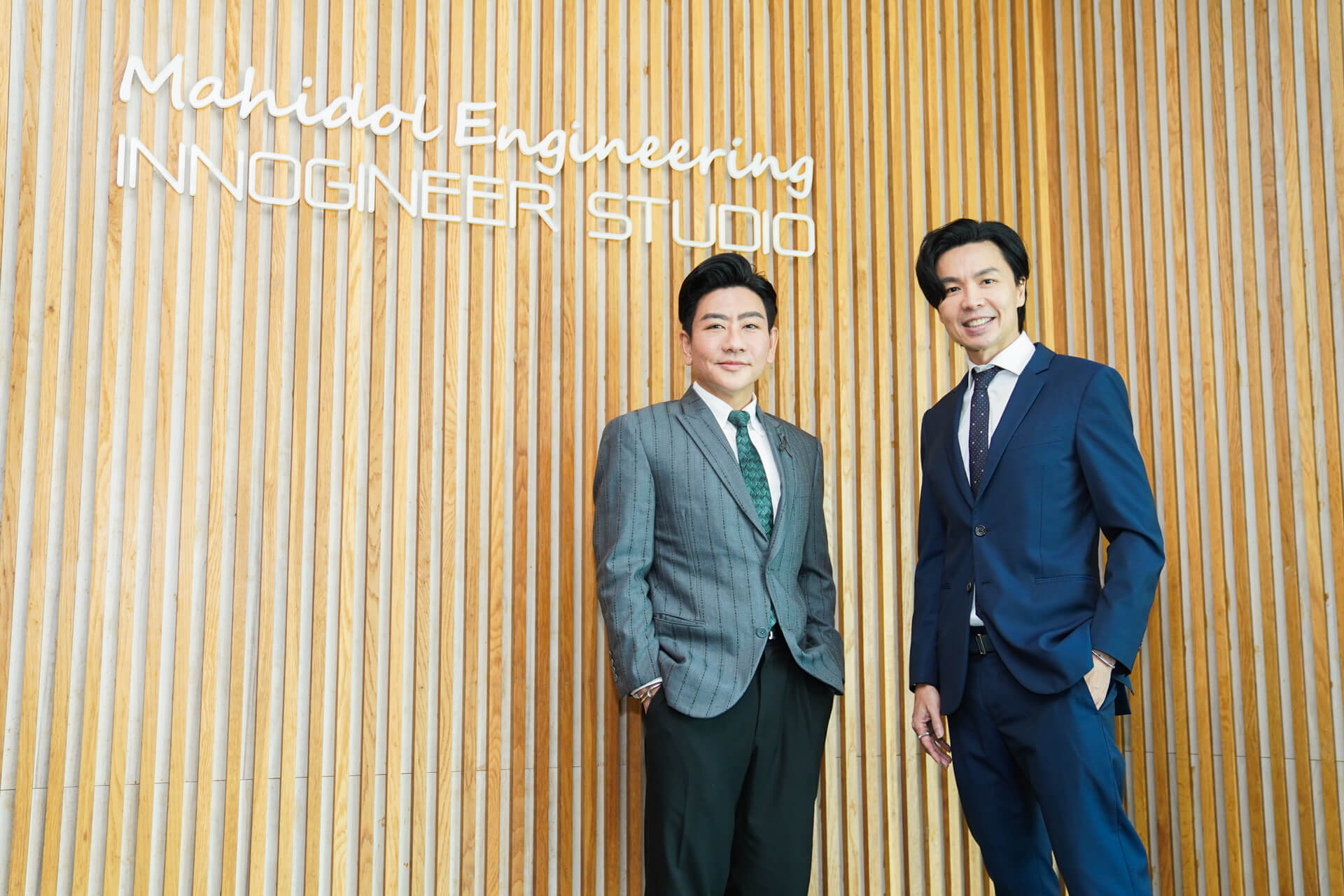
Mr. Kayon Tantichatiwat, Chief Executive Officer of Metthier Co., Ltd., said the signing of an academic Memorandum of Understanding (MOU) with the Faculty of Engineering at Mahidol University, Salaya, to develop SMART Campus marks a significant step in the company’s efforts to apply technology to comprehensive campus and building management.
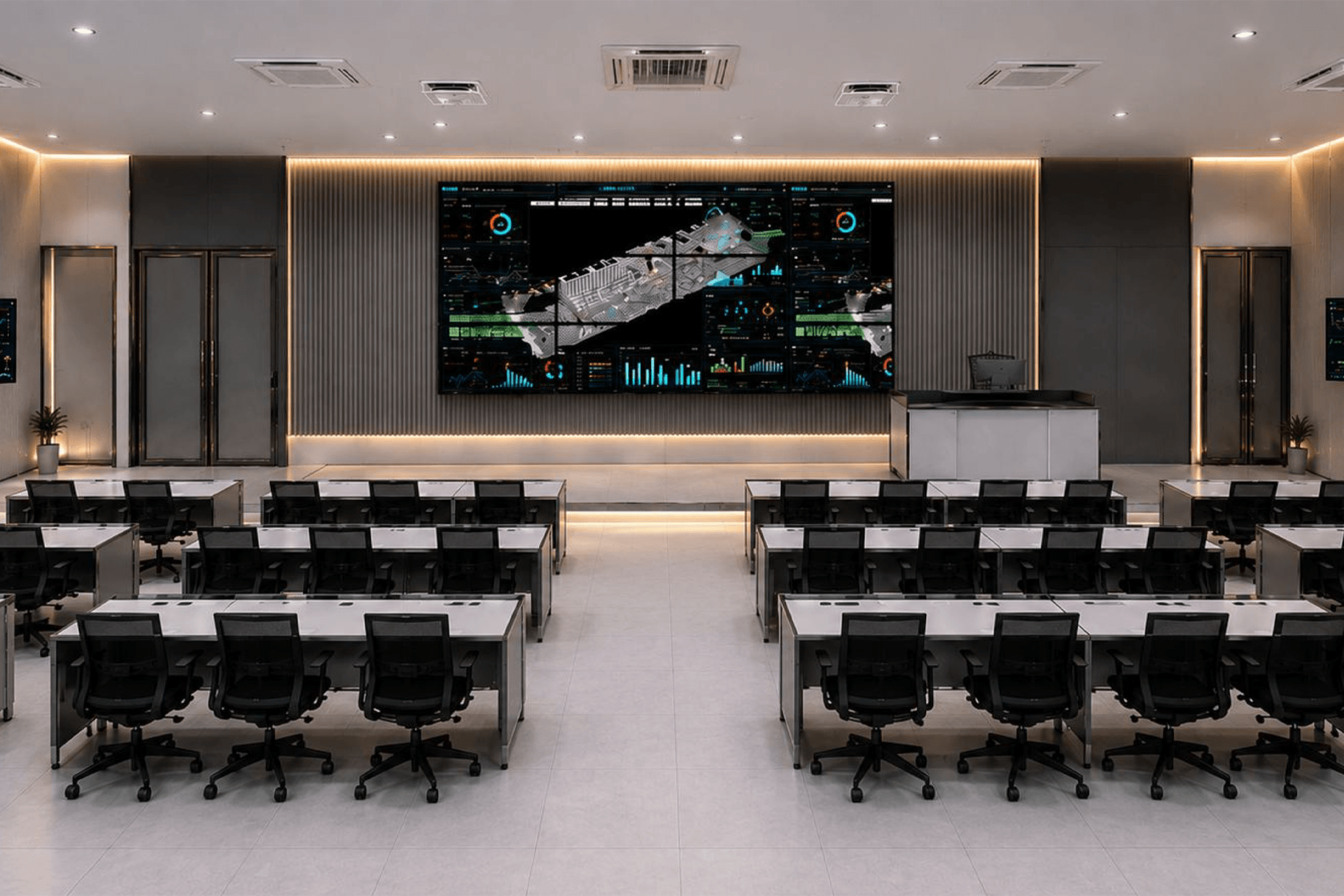
By integrating Smart Integrated Facility Management, a Command Center, and Digital Twin technology, the project will establish Thailand’s first model site and learning center dedicated to studying, researching, developing, and applying technologies that support digital cities and sustainable smart campuses. It will also equip personnel with the skills needed to become highly capable specialists through hands-on learning and practical experience with artificial intelligence and industry-standard software.
“Mahidol University’s Salaya campus is a large site with a diverse range of buildings and activities. Developing SMART Campus therefore goes beyond improving safety and security. It involves integrating technologies to create an efficient, environmentally responsible, and energy-saving campus management system. The project will also strengthen personnel’s operational skills and develop practical knowledge that can be applied in the construction industry and the development of modern smart cities,” Mr. Kayon said.
Associate Professor Thanapat Wanichanon, The Dean of the Faculty of Engineering at Mahidol University, said the collaboration reflects the faculty’s commitment to continuously developing personnel into leaders in innovation and technology.
The initiative aims to transform the campus into a sustainable smart campus, expand the capabilities of university personnel, and modernize campus operations in line with international academic standards. This will be achieved by developing technological infrastructure that improves safety, environmental management, and energy efficiency.
“SMART Campus will be Thailand’s first smart campus model to integrate technologies such as artificial intelligence, automation management platforms, and the Internet of Things (IoT) to enhance campus management. It will also create a learning environment for faculty members, staff, and students, combining theoretical study with practical experience using advanced technologies such as Remote Patient Monitoring and an Intelligent Operations Center. This will strengthen their understanding of innovation and its industrial applications, preparing them to become technology leaders,” Associate Professor Thanapat said.
SMART Campus is being developed around the concept of Smart Integrated Facility Management (Smart IFM), an integrated framework that efficiently connects building systems and devices. It is guided by four key principles: System Security, to protect data and systems; System Reliability, to support stable, round-the-clock operations; System Scalability, to accommodate future expansion; and System Integration, to ensure seamless connectivity across systems.
The collaboration covers technology development and research across five key areas:
- Smart Health:
Smart Health will enhance health monitoring and proactive well-being initiatives within the campus and across Mahidol University’s hospital network. The development of digital technologies, platforms, and infrastructure will provide data resources and tools for practical applications, research, and joint development in biomedical engineering and computing.
A key focus will be smart medical devices, including Remote Patient Monitoring systems and telemedicine technologies.
- Smart City:
The project will develop the campus into a Smart Campus Living Lab, integrating building control systems with smart infrastructure management. Researchers and students will be able to use real-world case studies to explore IoT sensor networks, energy-efficient Smart Building Control, and energy optimization.
- Smart Logistics:
Researchers and students will gain access to data from location-tracking technologies and Smart Fleet Management systems operating within the university. This will support learning and research into the use of AI and smart fleet technologies to optimize routes and develop faster, safer medical transport systems.
The initiative will also support research into Healthcare Logistics Optimization, including systems that monitor and control transport conditions for medical specimens and medicines, as well as robots used to transport medical supplies. These applications will help improve the speed and safety of healthcare logistics and generate valuable research for leading medical institutions.
- Smart Security:
Smart Security will strengthen campus safety through the deployment of AI and threat-detection technologies in research facilities and across the campus. These include AI CCTV Analytics, automated access control systems, and an Intelligent Operations Center.
The facilities will allow students and researchers to study security operations in practice, helping prepare them for careers as engineers and security specialists in industrial settings.
- Smart Environment:
Smart Environment will support the campus’s transition toward net-zero greenhouse gas emissions and a Sustainable Smart Campus that effectively integrates technology into sustainable operations.
The initiative will introduce energy-saving assessment technologies and Smart Waste Management systems, guided by environmental, social, and governance (ESG) criteria and carbon neutrality objectives.
Beyond these five areas, SMART Campus will serve as a hub for learning and future innovation, providing dedicated learning and workshop spaces to share Smart IFM knowledge with school and university students, government agencies, private-sector organizations, and the wider public. Programs will combine theoretical learning with hands-on practice to develop specialists and foster a sustainable learning ecosystem.
The initiative aligns with Metthier’s commitment to continuously developing Thai professionals. This commitment includes establishing Metthier Academy to equip personnel with the skills to work alongside technology, collaborating with leading universities to develop the next generation of professionals, and developing SMART Campus at Mahidol University, Salaya.
Through this project, Metthier aims to demonstrate the effective application of Smart IFM in campus and building management and extend the model to establish a new standard for managing educational facilities.